
Ceramic silicone vs mica vs PI film for battery busbars
Ceramic silicone is the fire barrier: it stays flexible in normal use and turns into a hard ceramic shell in a flame. Mica tape and PI film are reinforcement layers. Mica does not burn, and PI film adds dielectric strength in a very thin layer. Most battery busbars use more than one.
- Ceramic silicone keeps the conductor covered once the plastic jacket has burnt away
- Mica tape holds its insulation in a flame but cracks on tight bends
- PI film adds voltage strength with little thickness, but it is not a fire barrier on its own
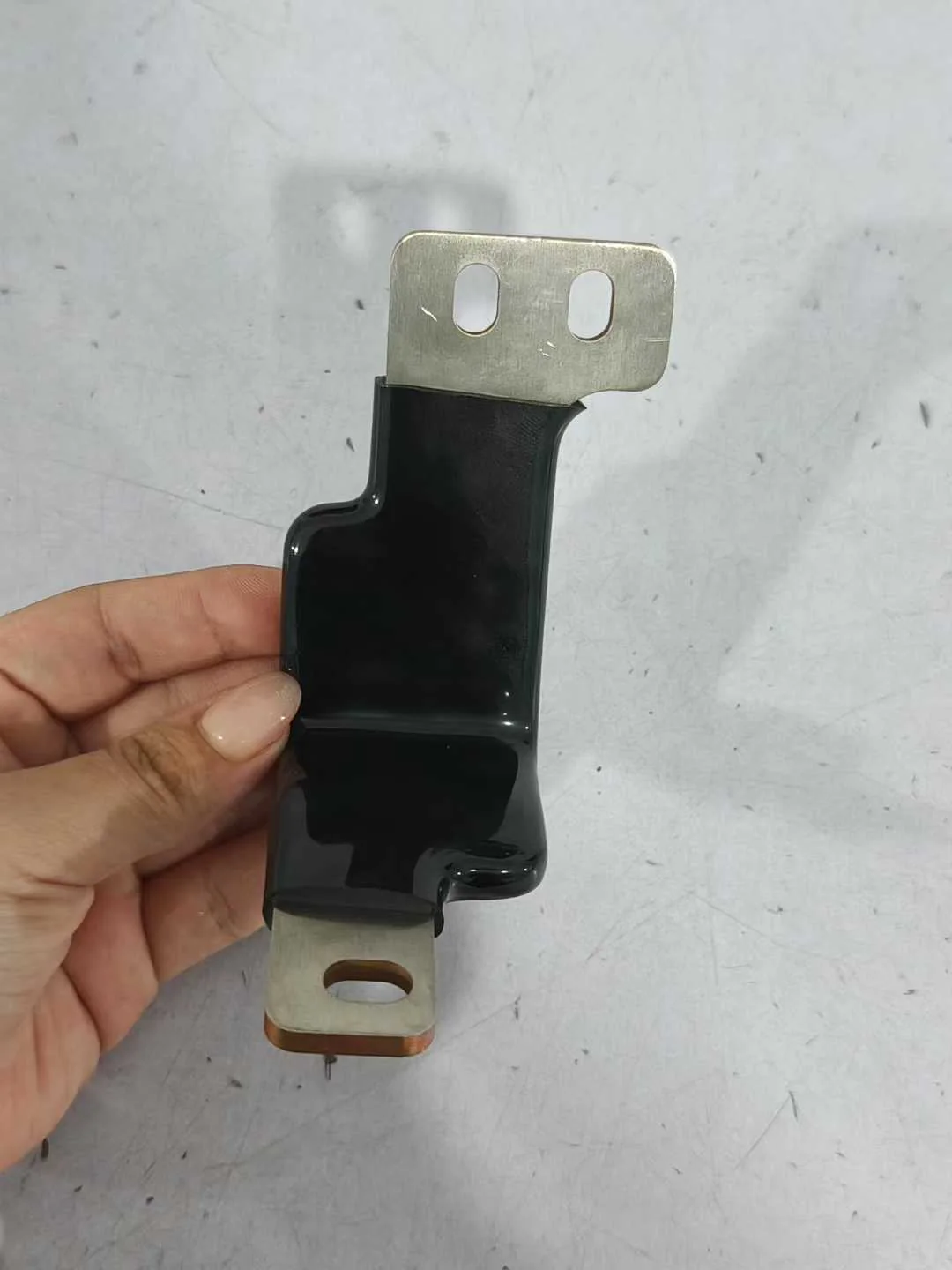
How do ceramic silicone, mica and PI film compare?
Each material solves a different problem. Ceramic silicone protects the conductor during a fire, mica keeps insulating at flame temperatures, and PI film gives high voltage strength in a thin wrap.
| Material | What it does best | Where it falls short |
|---|---|---|
| Ceramic silicone | Flexible rubber in normal use; turns into a rigid ceramic shell in a flame, so the bar stays covered | Thicker than tape or film, and it needs a jacket against abrasion |
| Mica tape | A mineral that does not burn; keeps insulating at flame temperatures | Brittle; it can crack or shed flakes on tight bends |
| PI film | High dielectric strength in a very thin layer; handles high operating temperatures | A polymer, so it chars in a direct flame instead of forming a barrier |
Glass-fibre cloth sits between the two tapes. It does not burn, it bends better than mica, and it holds the silicone layer in place, but it adds less voltage strength than PI film.
Why do battery busbars combine these materials?
No single layer covers normal operation, abrasion and a thermal event at the same time. A layered build lets each material do the one job it is good at.
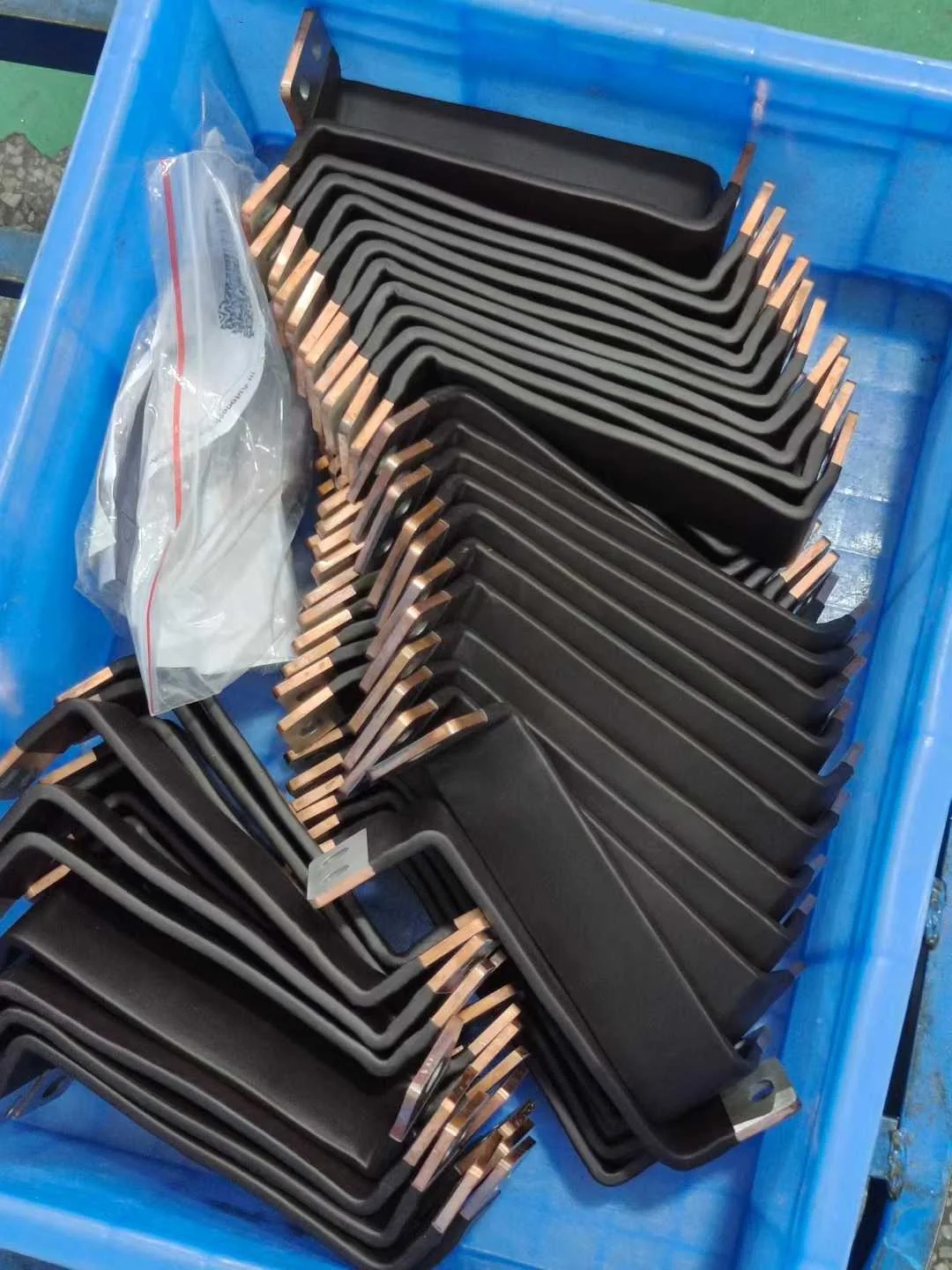
Our ceramic insulated busbars for battery packs use up to three layers over the copper or aluminium bar. The outer jacket in TPU, PVC or PA handles abrasion and everyday insulation. Under it, ceramic silicone is the fire barrier. Mica tape, glass-fibre cloth or PI film reinforces the silicone where the drawing calls for it.
We extrude and wind the ceramic silicone in-house, so the layer thickness and the bare terminal zones follow the drawing. Every insulated part is withstand-voltage tested before it ships.
Which layer should you choose for your pack?
Start from the risk you are designing against. If the busbar must stay covered in a thermal event, you need ceramic silicone. Then pick the reinforcement from the bend shape and the space you have.
| Your situation | Layer build to start from |
|---|---|
| Bar must stay covered during thermal runaway | Ceramic silicone under a plastic jacket |
| Tight bends or offsets | Ceramic silicone with glass-fibre cloth or PI film; mica only on straight runs |
| Very little space between bar and housing | PI film for voltage strength, keeping the build thin |
| Straight bars near cell vents | Ceramic silicone with mica tape reinforcement |
| No fire requirement, insulation only | Plastic jacket alone |
These are starting points, not ratings. The final build depends on the standard your pack must meet and on test results from your own lab.
What should you put in your drawing or RFQ?
Give us the requirement, not only the material name. The standard, the system voltage and the space limits decide the layer build more than any single material does.
- The fire or flame standard your pack must pass
- System voltage and the withstand voltage you test at
- Maximum insulation thickness and minimum clearance to the housing
- Bend radii and any offsets on the bar
- Terminal and contact areas that must stay bare
We do not run flame or thermal runaway tests in-house, and we do not publish fire-duration ratings. We review the layer build against your standard and send samples to a lab you choose. Our in-house checks cover dimensions, material and withstand voltage.
Ceramic silicone and mica FAQ
Can ceramic silicone replace mica completely?
Often, yes, for the fire-barrier role. Mica is still useful as a thin reinforcement on straight sections where you want extra insulation at flame temperatures.
Is PI film enough on its own for fire protection?
No. PI film chars in a direct flame. Use it for voltage strength in thin builds, together with ceramic silicone where fire protection matters.
Can the same layers go on aluminium busbars?
Yes. Aluminium and copper bars take the same layer build. Aluminium needs larger bend radii, which suits silicone and glass-fibre cloth better than mica.
Need a layer build reviewed?
Send your drawing and the standard your pack must meet.