
How to size a braided copper connector
Size a braided copper connector in four steps: cross-section from the current, length from the movement it must absorb, terminal type from how it is bolted, then finish and insulation from where it is installed. Current comes first, because it sets the copper area.
- Cross-section is set by the current and the temperature rise you allow
- Length needs enough slack for the full movement, without sagging onto nearby parts
- Pressure-welded terminals suit flat bolted joints; crimped sleeves suit lug-style ends
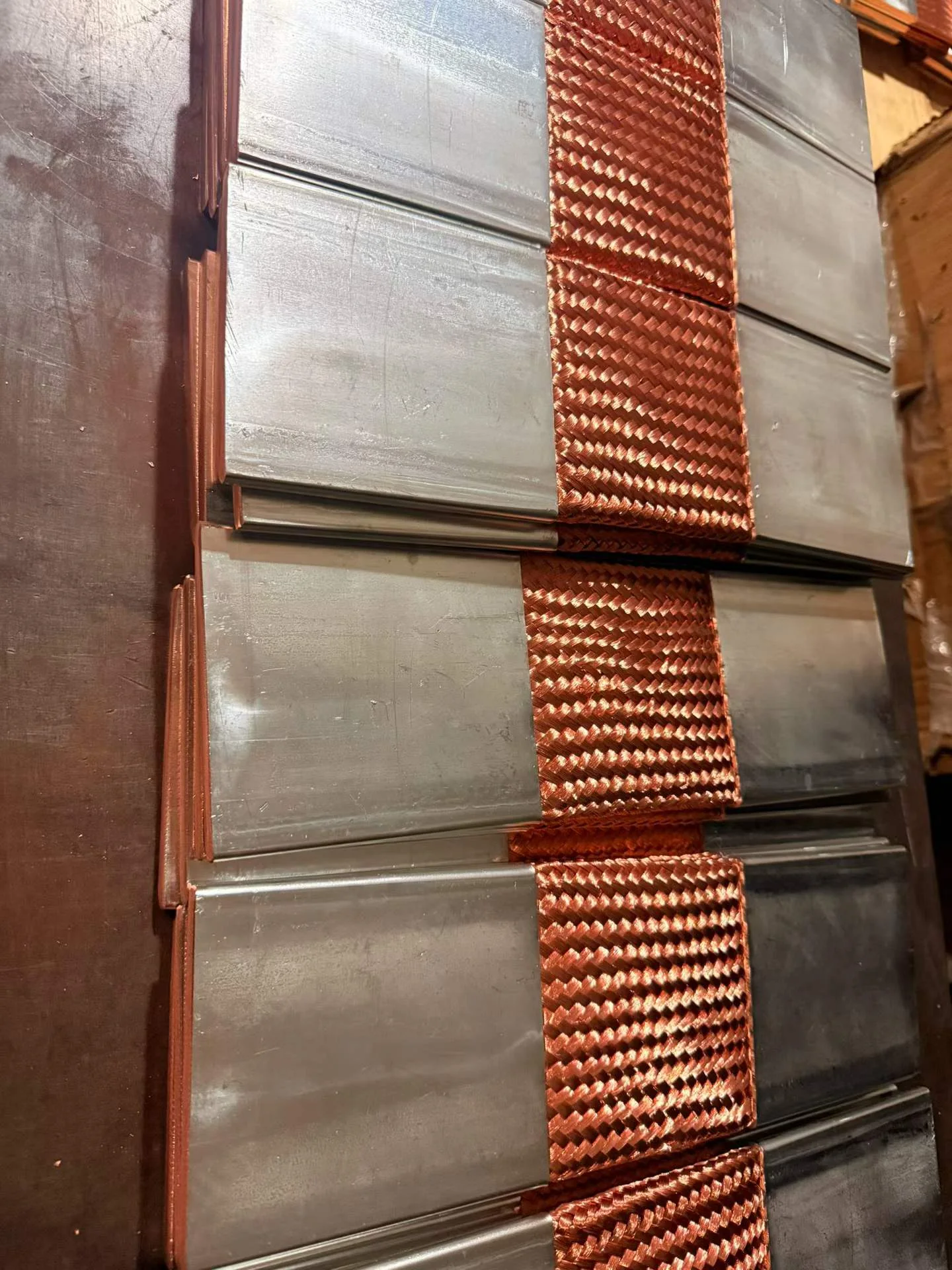
What cross-section does a braided connector need?
Start from the continuous current and the temperature rise you can accept. Then check the braid maker's rating table for that exact cross-section, rather than using one current density for every size.
Current per square millimetre falls as the braid gets bigger. A large braid has less surface for its copper area, so it sheds heat less well. Add margin when the connector sits in a closed enclosure, near other hot parts or in a high ambient temperature.
Battery and energy storage joints often need extra margin, because the current stays high for long periods. If two smaller braids fit better than one large braid, you can run them in parallel on the same terminals.
How long should a braided connector be?
Long enough to cover the largest movement between the two mounting points, plus some slack. Too short, and the braid pulls on its terminals. Too long, and it sags onto nearby parts.
- Measure hole centre to hole centre at the widest point of movement
- Add slack for vibration, thermal expansion and assembly tolerance
- Check that the braid does not touch the housing or another phase when it moves
- Allow a gentle bend radius; tight kinks break strands over time
Pressure-welded or crimped terminals: which should you choose?
Choose pressure-welded terminals for flat bolted joints that carry high current. Choose crimped sleeves when you want a lug-style end or a round contact. We make both.
| Terminal | How it is made | Best for |
|---|---|---|
| Pressure-welded | Braid ends fused into a solid copper block under heat and pressure | Flat bolted joints on busbars and transformers |
| Crimped sleeve | A copper sleeve crimped over the braid end, then flattened and drilled | Lug-style ends and smaller cross-sections |
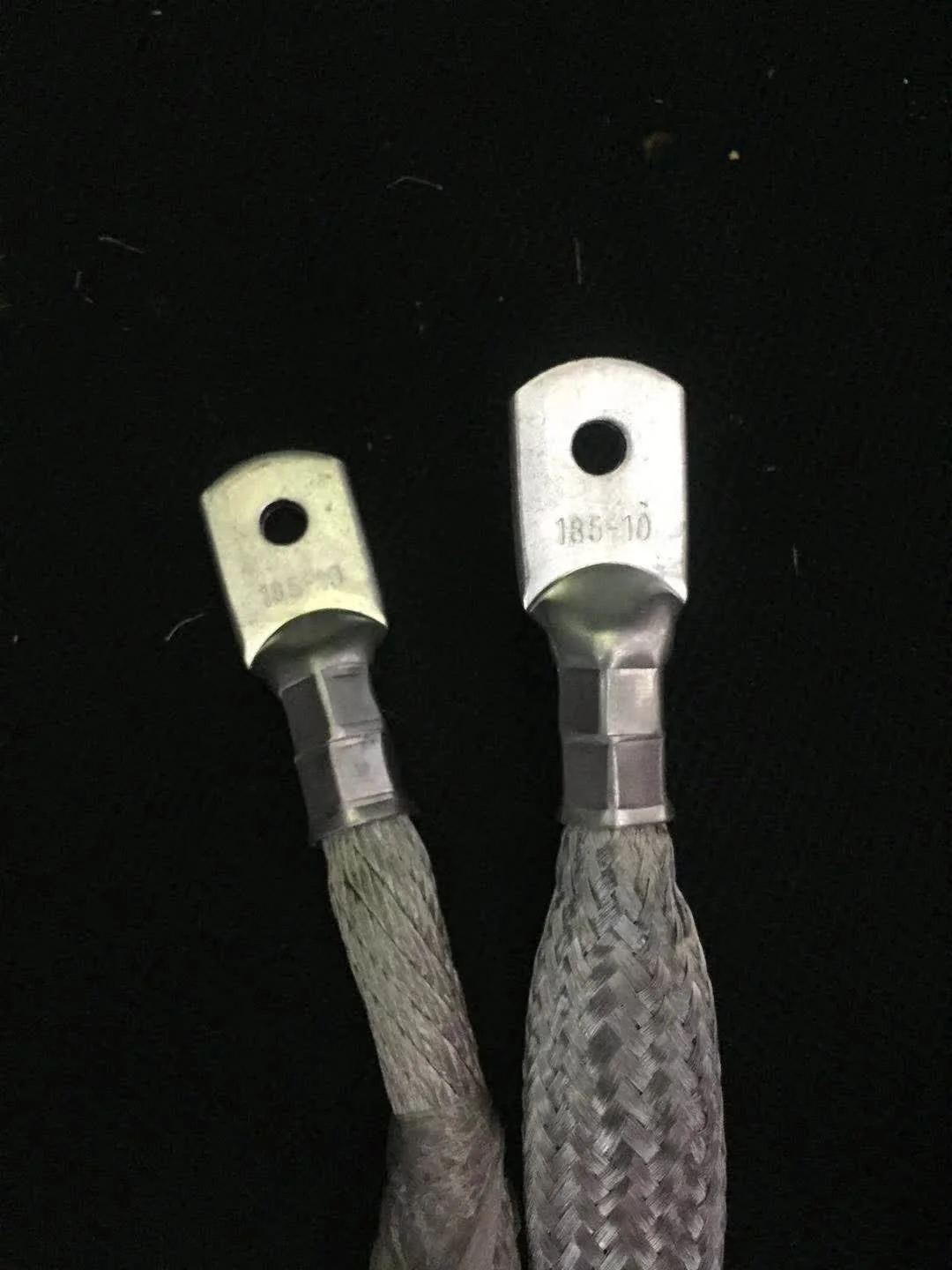
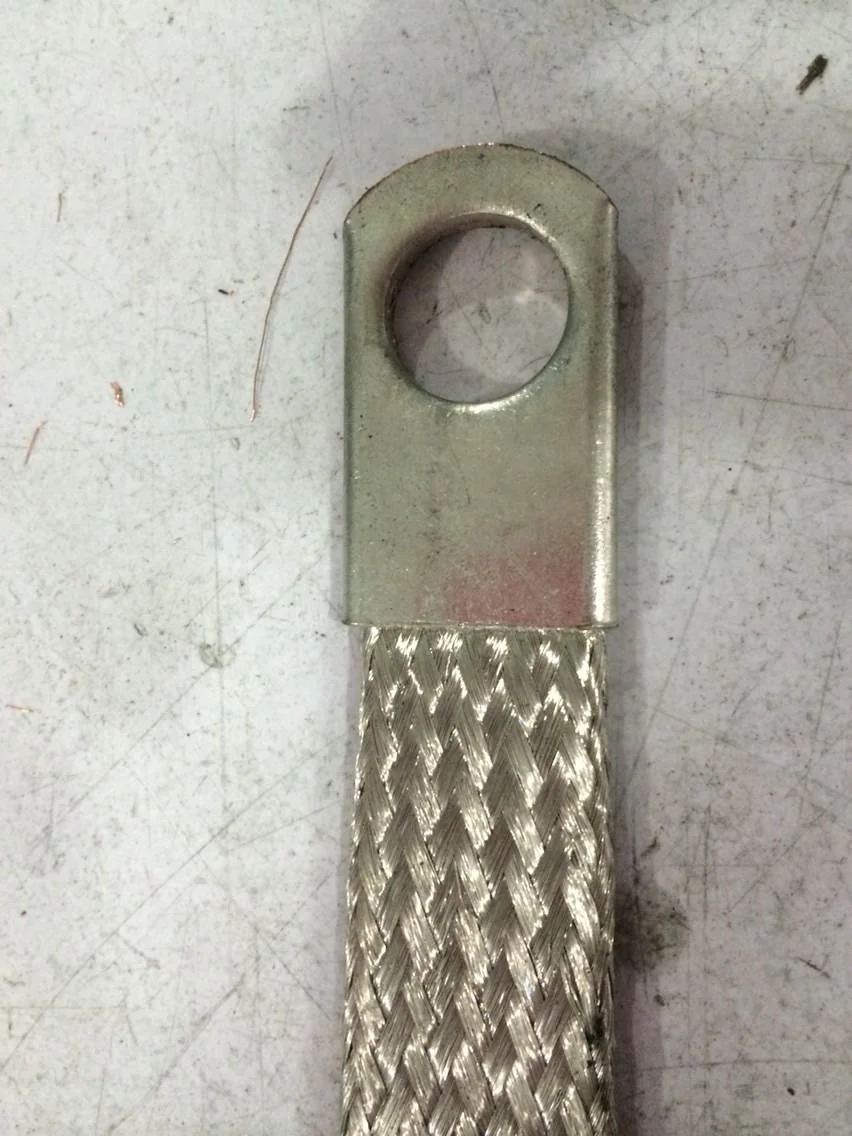
Hole positions and terminal widths follow your drawing. The same bolt pattern as the rigid bar keeps assembly simple, and our braided copper busbars made to length are drilled or punched to match.
Should the braid be bare, tinned or insulated?
Bare braid suits dry indoor equipment and costs less. Tinned braid resists oxidation in damp or corrosive air. Add insulation when the braid runs close to the housing or another phase.
We can insulate the braid and leave the terminals bare for bolting. Terminals can be tin-plated even when the braid itself is bare. For joints between rigid bars in switchgear, see our power distribution busbars for switchgear.
Braided connector sizing FAQ
What should I send for a quote?
Send the current, cross-section or copper area, length between hole centres, hole pattern, terminal type, finish, insulation and yearly quantity. A drawing covers most of these.
Can you match an existing connector?
Yes. Send a photo with the dimensions or a sample. We match the cross-section, length and hole pattern, and confirm them before production.
How fast are samples?
Samples take 7 days from an approved drawing.
Need braided connectors made to length?
Send your current, length and hole pattern for a quote.